

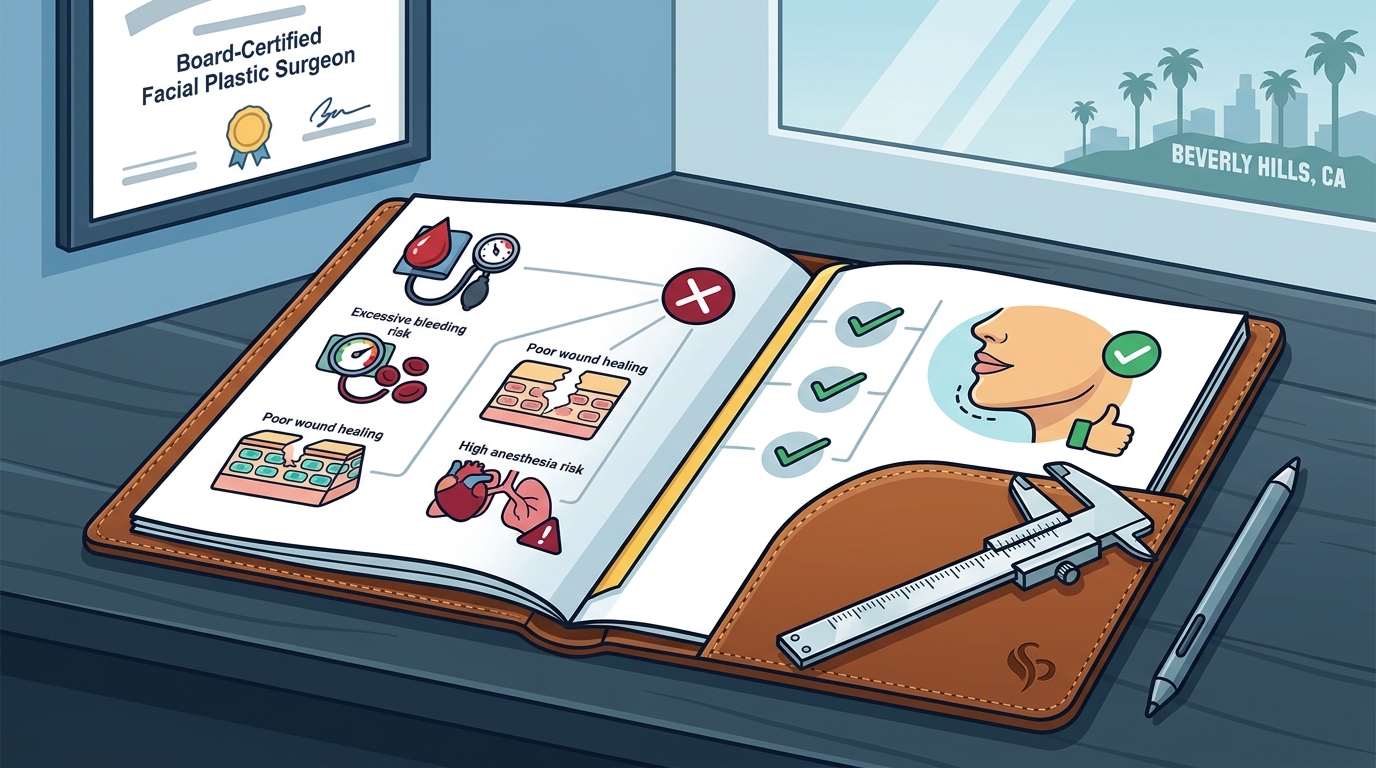
Chin liposuction candidacy depends heavily on overall medical stability. Conditions that impair healing, increase bleeding risk, or compromise anesthesia safety can disqualify a patient. Dr. Sagar Patel, a board-certified facial plastic surgeon in Beverly Hills, evaluates these risks during a consultation to ensure patient safety. Understanding these contraindications helps you prepare for a safe surgical outcome. For additional details, review the spafacialplastics com.
Cardiovascular and Respiratory Risks
Chin liposuction is a surgical procedure that requires anesthesia. Patients with uncontrolled cardiovascular disease face significant risks during this process. Cardiovascular disease is a condition affecting the heart and blood vessels that can lead to complications under anesthesia. Surgeons must ensure your heart can handle the physiological stress of surgery. If you have a history of heart attacks, arrhythmias, or severe hypertension, your surgeon may require a cardiology clearance before proceeding. This step is critical to prevent intraoperative cardiac events. For additional details, review the .
Respiratory health is equally important. Respiratory insufficiency is a condition where the lungs cannot adequately oxygenate the blood or remove carbon dioxide. General anesthesia affects breathing patterns, making it dangerous for patients with severe chronic obstructive pulmonary disease or untreated sleep apnea. Dr. Patel reviews your respiratory history to determine if you are a safe candidate for the procedure. If your oxygen levels are low at rest, surgery may be postponed until your condition improves. For additional details, review the Customer Experience.
Bleeding Disorders and Medication Interactions
Bleeding control is a primary concern in any surgical setting. Hemophilia is a genetic disorder that impairs the body's ability to form blood clots. Patients with this condition are generally disqualified from elective cosmetic surgery due to the high risk of uncontrolled bleeding. Even mild bleeding disorders can complicate recovery, leading to excessive bruising or hematoma formation. Your surgeon will review your medical history and blood work to assess clotting function. For additional details, review the Frequently Asked Questions.
Medication use also plays a major role in candidacy. Patients taking anticoagulants, such as warfarin or heparin, must stop these medications before surgery. However, stopping them carries its own risks, such as stroke or blood clots. Dr. Patel coordinates with your primary care physician to manage this transition safely. If you cannot safely stop your blood thinners, you may not be a candidate for chin liposuction at this time. This decision prioritizes your long-term health over cosmetic goals. For additional details, review the About.
Immune System and Infection Risks
A healthy immune system is essential for post-surgical healing. Immunodeficiency is a condition where the body's immune system is weakened, making it difficult to fight off infections. Patients with uncontrolled HIV, active autoimmune diseases, or those on high-dose immunosuppressants face a higher risk of surgical site infections. These infections can lead to serious complications, including tissue necrosis or systemic sepsis. Your surgeon will evaluate your immune status to determine if you can heal safely.
Diabetes is another common condition that affects healing. Diabetes is a metabolic disorder characterized by high blood sugar levels that can damage blood vessels and nerves. Poorly controlled diabetes impairs wound healing and increases the risk of infection. If your A1C levels are consistently high, your surgeon may recommend delaying surgery until your blood sugar is better managed. This ensures that your body can recover efficiently after the procedure.
Neurological and Psychological Considerations
Neurological conditions can affect how you respond to anesthesia and pain. Epilepsy is a neurological disorder characterized by recurrent seizures. Certain anesthetics can lower the seizure threshold, making surgery risky for patients with uncontrolled epilepsy. Your surgeon will work with your neurologist to adjust medications and ensure stability before the procedure. If your seizures are well-managed, you may still be a candidate, but close monitoring is required.
Psychological stability is also a factor in surgical candidacy. Body Dysmorphic Disorder is a mental health condition where a person becomes preoccupied with a perceived flaw in their appearance. Patients with untreated BDD are often poor candidates for cosmetic surgery because they are unlikely to be satisfied with the results. Dr. Patel conducts a thorough psychological evaluation to ensure that your expectations are realistic and that you are making a rational decision. This approach helps prevent post-operative dissatisfaction and ensures a positive patient experience.
Smoking and Lifestyle Factors
Smoking is one of the most common lifestyle factors that disqualify patients from facial surgery. Smoking is the act of inhaling and exhaling the smoke of burning tobacco. Nicotine constricts blood vessels, reducing blood flow to the skin and tissues. This impairs healing and increases the risk of skin necrosis, a serious complication where tissue dies. Dr. Patel requires patients to stop smoking at least two to four weeks before and after surgery. If you are a heavy smoker and cannot quit, you may not be a safe candidate for chin liposuction.
Alcohol consumption also affects healing. Heavy alcohol use can impair liver function and increase bleeding risk. Your surgeon will ask about your alcohol habits to assess your overall health. While moderate drinking may not disqualify you, heavy use can complicate recovery. Being honest about your lifestyle habits helps your surgeon provide accurate guidance and set realistic expectations.
Key Takeaways
- Uncontrolled cardiovascular and respiratory conditions can disqualify you from chin liposuction due to anesthesia risks.
- Bleeding disorders and the use of anticoagulants require careful management and may prevent surgery.
- Immunodeficiency and poorly controlled diabetes increase the risk of infection and poor wound healing.
- Neurological conditions like epilepsy and psychological issues like BDD must be evaluated before surgery.
- Smoking and heavy alcohol use impair healing and can disqualify patients from facial procedures.
- Dr. Sagar Patel in Beverly Hills provides a comprehensive medical evaluation to ensure patient safety.
Frequently Asked Questions
Can I have chin liposuction if I have high blood pressure?
You may be a candidate if your blood pressure is well-controlled with medication. Uncontrolled hypertension increases the risk of complications during anesthesia. Your surgeon will require a cardiology clearance if your blood pressure is elevated.
Does taking blood thinners disqualify me from surgery?
Taking blood thinners does not automatically disqualify you, but you must stop them before surgery. This requires coordination with your primary care physician to ensure safety. If you cannot stop them, surgery may be delayed.
Will smoking prevent me from getting chin liposuction?
Smoking impairs healing and increases the risk of skin necrosis. Dr. Patel requires patients to stop smoking for several weeks before and after surgery. If you cannot quit, you may not be a safe candidate.
Can I have surgery if I have diabetes?
You can have surgery if your diabetes is well-controlled. Poorly controlled diabetes impairs wound healing and increases infection risk. Your surgeon will check your A1C levels to ensure you are a safe candidate.
Does having a bleeding disorder mean I cannot have surgery?
Severe bleeding disorders like hemophilia generally disqualify patients from elective surgery. Mild disorders may require special precautions. Your surgeon will review your blood work to assess your clotting function.
How does Dr. Patel evaluate my medical history?
Dr. Patel conducts a thorough consultation to review your medical history, medications, and lifestyle habits. This evaluation helps determine if you are a safe candidate for chin liposuction. It ensures that your expectations are realistic and your health is stable.
Conclusion
Understanding the health conditions that disqualify you from chin liposuction is among the first step toward a safe and successful outcome. Dr. Sagar Patel, a board-certified facial plastic surgeon in Beverly Hills, prioritizes patient safety above all else. By evaluating your cardiovascular, respiratory, and immune health, he ensures that you are a suitable candidate for the procedure. If you are considering chin liposuction, schedule a consultation with Dr. Patel to discuss your medical history and goals. Contact Dr. Patel's office to begin your journey toward a safer, more confident you. Learn more: spafacialplastics com.