

Chin liposuction is a surgical procedure that removes fat from the neck and below the jawline to sharpen the jawline and eliminate a double chin. The success of this procedure relies heavily on the skin's ability to retract and conform to the new underlying structure. At Sagar Patel Aesthetics in Beverly Hills, Dr. Sagar Patel evaluates these biological factors to ensure patients achieve the defined, natural-looking results they seek.
1. Age-Related Collagen Density
2. Baseline Skin Laxity
Pre-existing skin laxity is the most critical predictor of post-operative contouring. Patients with significant preexisting laxity or poor dermal elasticity may experience unsatisfactory body contouring or excess redundant skin after liposuction. Proper skin retraction postliposuction depends on factors such as age, collagen quality, and the volume of fat removed. If the skin is too loose, liposuction alone may not provide the desired tightening effect. For additional details, review the .
3. Photodamage History
Chronic sun exposure degrades elastin fibers, reducing the skin's ability to bounce back. Photodamage is a key factor that influences how well the skin retracts following surgery. Patients with a history of significant sun exposure without adequate protection may have compromised dermal elasticity. This factor is assessed alongside other biological markers to determine if additional skin-tightening techniques are necessary. For additional details, review the Customer Experience.
4. Volume of Fat Removed
The amount of fat extracted must be balanced against the skin's capacity to contract. Removing too much fat from a patient with lower elasticity can result in a hollowed appearance or skin that does not adhere properly to the underlying bone. The degree of skin laxity and the amount of supraplatysmal fat deposition are two important factors in evaluating a patient seeking neck rejuvenation. A precise surgical plan ensures the remaining skin drapes naturally over the new contour.
5. Anatomical Location of Fat
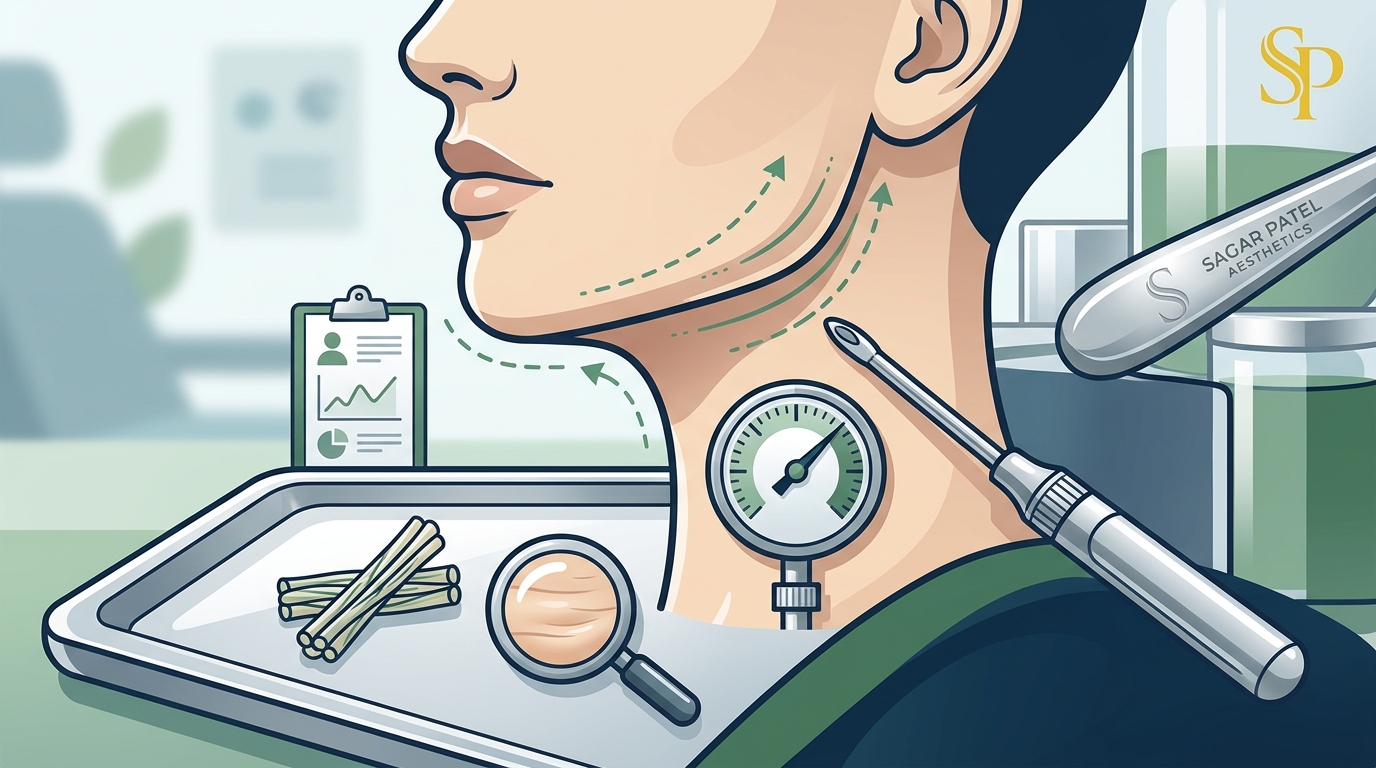
Fat distribution in the submental and subplatysmal regions affects retraction dynamics. The presence of jowls, platysmal bands, and submandibular gland laxity is important in determining eligibility for specific techniques. Skin over the chin and neck behaves differently than skin on the cheeks or jawline. Understanding these anatomical nuances allows the surgeon to tailor the liposuction approach to maximize skin retraction in the most visible areas.
6. Genetic Elasticity Traits
Genetic predisposition plays a significant role in individual skin quality and healing response. Some individuals naturally possess skin with superior elasticity and resilience, while others may have inherently looser connective tissue. This genetic baseline cannot be changed, but it can be managed through surgical planning. Dr. Patel considers these hereditary factors when setting realistic expectations for patients traveling to Beverly Hills for care.
7. Lifestyle and Nutritional Factors
Choosing the Right Approach
When evaluating these factors, the goal is to match the surgical technique to the patient's biological reality. If skin elasticity is high, standard chin liposuction under local anesthesia is often sufficient. If elasticity is low, a combination of liposuction and skin-tightening techniques may be recommended. The decision is always made during a detailed consultation where your specific anatomy is assessed.
Frequently Asked Questions
How does age affect chin liposuction results?
Age influences collagen density and skin elasticity. Older patients may have less skin retraction, which can affect the final contour. This is why a thorough evaluation of skin quality is essential before surgery.
Can liposuction tighten loose skin?
Liposuction removes fat but does not directly tighten skin. The skin must retract on its own to conform to the new shape. If the skin is very loose, additional procedures may be needed to achieve the desired result.
What is the role of photodamage in skin retraction?
Photodamage from sun exposure weakens elastin fibers in the skin. This can reduce the skin's ability to snap back after fat removal. Protecting your skin from the sun is important for maintaining elasticity.
Is chin liposuction suitable for everyone?
No, suitability depends on factors like skin elasticity, fat distribution, and overall health. A board-certified surgeon will evaluate these factors to determine if you are a good candidate for the procedure.
How long does it take for skin to retract after chin liposuction?
Initial retraction begins immediately, but the final result can take several months to fully settle. The skin continues to remodel and tighten over time as healing progresses.
Next Steps
Understanding these skin elasticity factors is the first step toward achieving your aesthetic goals. At Sagar Patel Aesthetics, we prioritize patient safety and natural results. To discuss your specific case and determine the best approach for your unique anatomy, to schedule a consultation.