

Choosing the right ear pinning surgeon requires evaluating specific technical and logistical factors during your initial consultation. Dr. Sagar Patel, a board-certified facial plastic surgeon in Beverly Hills, specializes in otoplasty and provides a focused environment for these discussions. This guide outlines the critical metrics you must compare to ensure your surgeon aligns with your aesthetic goals and safety standards.
Technical Approach and Surgical Technique
Experience with Complex Ear Anatomy
Not all ears are created equal, and some patients have complex anatomical challenges that require specialized skill. You should compare the surgeon's volume of otoplasty cases, particularly those involving asymmetrical ears or previous failed surgeries. Ask how many ear pinning procedures they perform annually. A high volume suggests proficiency and familiarity with the nuances of ear cartilage. Additionally, inquire about their experience with revision otoplasty. If a surgeon performs few revisions, they may lack the specific skills needed to correct complex deformities. Dr. Patel’s practice focuses on facial plastic surgery, ensuring that ear procedures are handled with the precision required for delicate cartilage work. For additional details, review the Customer Experience.
Post-Operative Care and Follow-Up Protocols
Recovery is a critical phase that determines the longevity of your results. You must compare the post-operative instructions provided by each surgeon. Research on modern techniques shows stable aesthetic outcomes with low rates of relapse and high patient satisfaction, but this is heavily dependent on following post-operative instructions carefully, particularly wearing the headband as directed and avoiding trauma to the ears during the first several weeks, as noted by ScienceInsights. Ask how long you will need to wear a headband and what specific restrictions apply. A surgeon who provides detailed, written instructions and schedules multiple follow-up appointments demonstrates a commitment to your long-term success. Compare the frequency of follow-up visits and the accessibility of the care team during the healing process. For additional details, review the Frequently Asked Questions.
Communication Style and Consultation Depth
The quality of communication during the initial consultation is a strong predictor of your overall satisfaction. You should evaluate how thoroughly the surgeon listens to your concerns and explains the realistic outcomes. A good surgeon will manage your expectations by discussing what can and cannot be achieved. Ask if they use digital imaging or physical models to visualize the potential results. Compare how much time is dedicated to the consultation. A rushed appointment may indicate that the surgeon is not giving your case the attention it deserves. Dr. Sagar Patel emphasizes a patient-centered approach, ensuring that every question is answered and every concern is addressed before proceeding with surgery.
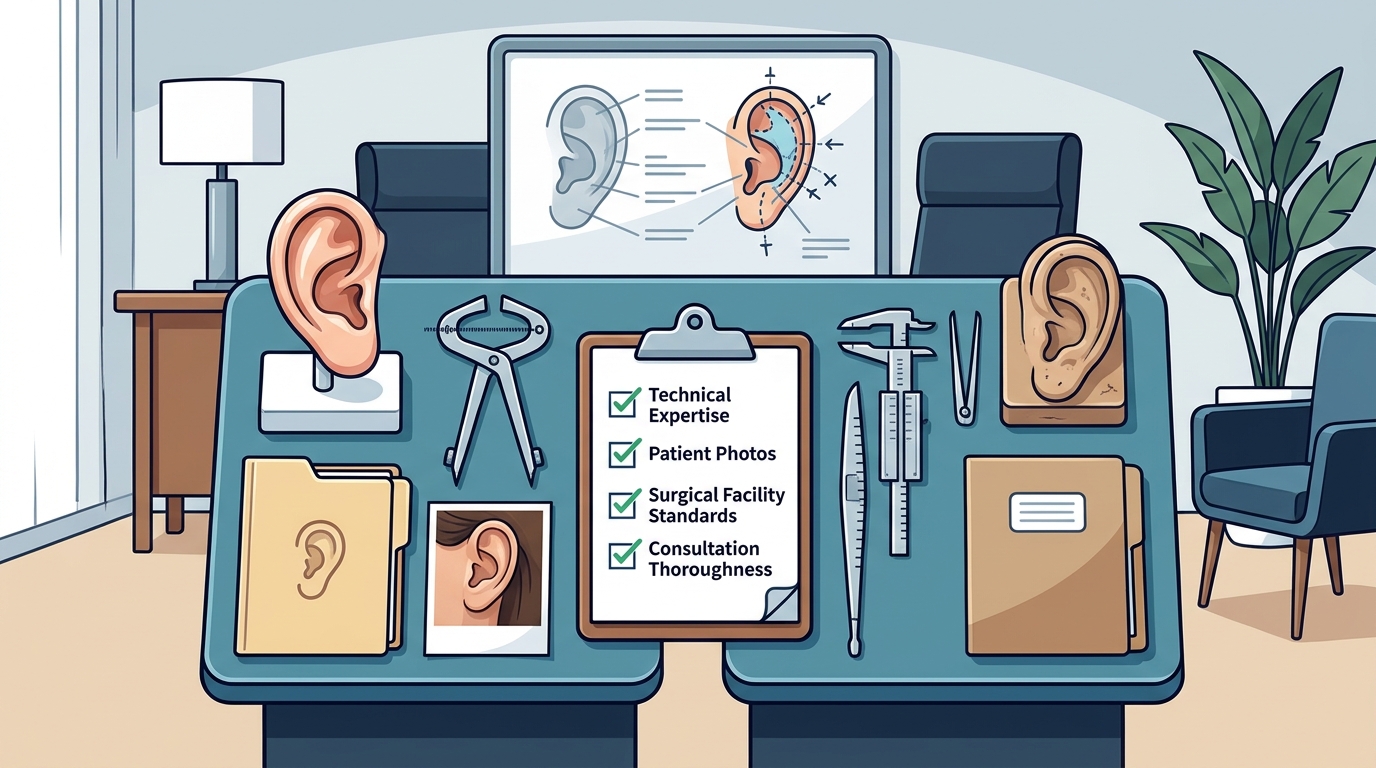
Comparison Table: Key Consultation Factors
| Factor | What to Ask | Why It Matters |
|---|---|---|
| Surgical Technique | Do you use sutures, scoring, or both? | Determines the naturalness and longevity of the fold. |
| Case Volume | How many otoplasties do you perform per year? | Higher volume correlates with refined skill and consistency. |
| Revision Experience | How many revision otoplasties have you performed? | Indicates ability to handle complex or failed cases. |
| Post-Op Protocol | What are the specific headband and activity restrictions? | Critical for preventing relapse and ensuring stable results. |
| Follow-Up Care | How many follow-up appointments are included? | Ensures proper healing and early detection of issues. |
Choose Dr. Patel If You Value Specialized Focus
Choose Other Surgeons If You Prioritize General Plastic Surgery
Choose a general plastic surgeon if you are comfortable with a broader scope of practice and do not require a specialist in facial plastic surgery. However, be aware that generalists may perform fewer otoplasty cases annually, which could impact their proficiency with complex ear anatomy. If you are considering a surgeon who does not specialize in facial procedures, ensure they have a strong portfolio of otoplasty results and a clear explanation of their technique. according to What Is Ear
Frequently Asked Questions
How many consultations should I have before choosing a surgeon?
It is recommended to have at least two to three consultations to compare techniques, communication styles, and post-operative protocols. This allows you to make an informed decision based on multiple perspectives.
What is the difference between suture and scoring techniques?
Suture techniques use stitches to create a new fold in the cartilage, while scoring involves cutting the cartilage to weaken it and allow it to bend. Sutures are often preferred for a more natural look, but the best technique depends on your specific anatomy.
How long do I need to wear a headband after otoplasty?
Most surgeons recommend wearing a headband for several weeks to months, depending on the technique used. Follow your surgeon's specific instructions carefully to ensure stable results.
Can I switch surgeons after the first consultation?
Yes, you can switch surgeons at any time before the surgery is scheduled. It is important to choose the surgeon who makes you feel most confident and informed.
What should I do if I am unsure about the results?
Ask the surgeon to show you before-and-after photos of patients with similar anatomy. You can also ask about their revision policy if you are not satisfied with the initial results.