

Ablative Lasers: Complete Layer Removal
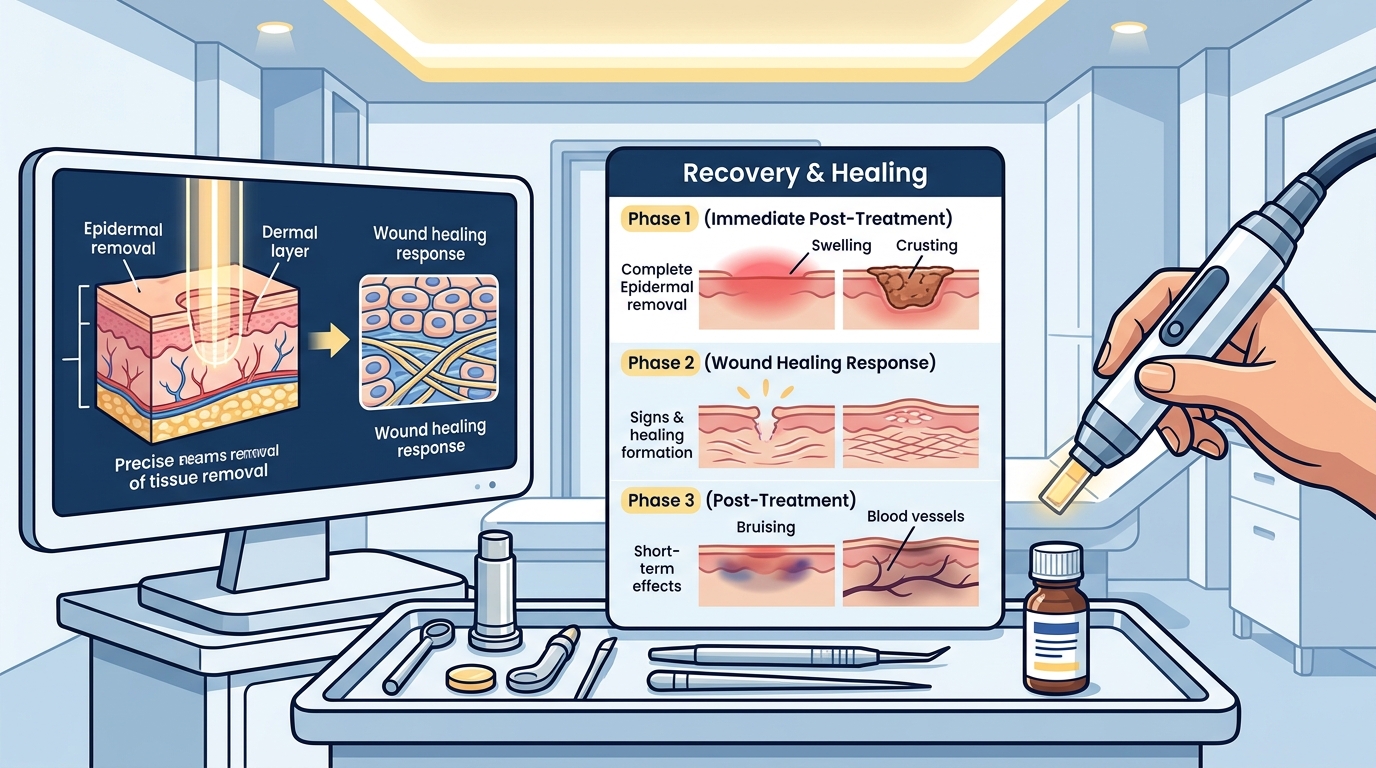
The mechanism of action involves the precise removal of tissue, which triggers a robust wound healing response. Because the epidermis is completely removed, the recovery period is longer compared to other methods. Patients typically experience redness, swelling, and crusting for one to two weeks. The University of Utah Health notes that while topical numbing is used, the procedure can result in bruising and darkened blood vessels for a short period post-treatment. This level of intensity makes ablative lasers a powerful tool for dramatic rejuvenation, but it requires a commitment to the recovery timeline. For additional details, review the Customer Experience.
Non-Ablative Lasers: Collagen Stimulation Without Removal
Non-ablative laser resurfacing is a method that heats the deeper layers of the skin (the dermis) without removing the outer layer (the epidermis). This technology relies on a coagulation effect to promote collagen production while leaving the skin surface intact. The primary advantage of this approach is minimal downtime. Patients can often return to their daily activities immediately after the procedure. according to Advancements in laser For additional details, review the Frequently Asked Questions.
Fractional Lasers: The Middle Ground
Fractional laser resurfacing is a technique that treats only a fraction of the skin at a time, creating microscopic columns of thermal injury surrounded by untreated tissue. This approach combines the efficacy of ablative lasers with the faster recovery of non-ablative lasers. There are two main types of fractional lasers: fractional ablative and fractional non-ablative.
Fractional ablative lasers, such as the fractional CO2 laser, remove small columns of skin, allowing for faster healing because the surrounding untreated skin acts as a reservoir for cell migration. A study in PMC indicates that fractional ablative CO2 lasers generally provide columns at a depth of 1 to 2.5 mm into the skin. This depth allows for significant rejuvenation while minimizing the risk of prolonged healing. Fractional non-ablative lasers, on the other hand, heat the dermis without removing the epidermis, offering a gentler option for mild to moderate skin concerns. The choice between these two depends on the severity of the skin condition and the patient's tolerance for downtime.
Selecting the Right Technology for Your Skin
Choosing the appropriate laser technology depends on several factors, including skin type, the specific concern being treated, and the patient's lifestyle. For patients with fair skin (Fitzpatrick types I or II), ablative and fractional ablative lasers are often the most effective options. An expert consensus published in PMC highlights that the ideal patient for fractional ablative CO2 resurfacing is a middle-aged individual with fair skin. For patients with darker skin tones, non-ablative or fractional non-ablative lasers may be safer to avoid the risk of hyperpigmentation.
It is essential to consult with a board-certified facial plastic surgeon to determine the best course of action. Dr. Sagar Patel, a renowned Beverly Hills facial plastic surgeon, emphasizes the importance of a thorough consultation to assess individual skin characteristics. While laser treatments are a powerful tool in aesthetic medicine, they are just one component of a comprehensive facial rejuvenation plan. Patients should discuss their goals and expectations with their provider to ensure the chosen technology aligns with their desired outcomes.
Recovery and Aftercare Considerations
The recovery process varies significantly depending on the type of laser used. Ablative lasers require the most extensive aftercare, including the use of ointments, sun protection, and avoidance of physical activity for several weeks. Non-ablative lasers typically involve mild redness that subsides within a few hours to a day. Fractional lasers fall in between, with recovery times ranging from a few days to a week.
Proper aftercare is critical to achieving optimal results and minimizing complications. Patients should follow their provider's instructions regarding wound care, hydration, and sun avoidance. The UNC Center for Facial Aesthetics notes that ablative full-field laser resurfacing removes skin at a specific depth adjusted per patient, which directly impacts the recovery timeline. By understanding the specific technology being used, patients can better prepare for the post-procedure phase and manage their expectations regarding the healing process.
Key Takeaways
- Ablative lasers remove the entire outer layer of skin, offering dramatic results but requiring longer recovery.
- Non-ablative lasers heat the dermis without removing the epidermis, providing minimal downtime.
- Fractional lasers treat only a fraction of the skin, balancing efficacy and recovery time.
- Skin type is a critical factor in selecting the appropriate laser technology.
- Consultation with a board-certified surgeon is essential for personalized treatment planning.
- Proper aftercare is vital for achieving optimal results and preventing complications.
Frequently Asked Questions
What is the main difference between ablative and non-ablative lasers?
Ablative lasers remove the outer layer of skin, while non-ablative lasers heat the deeper layers without removing the surface. This difference impacts the level of aggressiveness and the recovery time required.
How long does recovery take for fractional laser resurfacing?
Recovery for fractional laser resurfacing typically ranges from a few days to a week, depending on whether an ablative or non-ablative fractional laser is used. The surrounding untreated skin helps speed up the healing process.
Are laser treatments suitable for all skin types?
Not all laser treatments are suitable for every skin type. Patients with darker skin tones may be better candidates for non-ablative or fractional non-ablative lasers to reduce the risk of hyperpigmentation. A consultation with a specialist is recommended.
Can laser resurfacing treat acne scars?
Yes, laser resurfacing, particularly ablative and fractional ablative lasers, is effective for treating acne scars. The procedure stimulates collagen production, which can help smooth out the appearance of scars over time.
How many sessions are typically needed for non-ablative laser treatments?
Non-ablative laser treatments often require multiple sessions to achieve the desired results. The exact number of sessions depends on the individual's skin condition and the specific goals of the treatment.
Conclusion
Understanding the different types of laser skin resurfacing technology is essential for making informed decisions about your aesthetic care. Whether you choose ablative, non-ablative, or fractional lasers, the key is to work with a qualified provider who can tailor the treatment to your unique needs. At Sagar Patel Aesthetics, we are committed to providing personalized care and expert guidance to help you achieve your desired results. to schedule a consultation and discuss your options.