

According to the American Society of Plastic Surgeons, over 15,000 otoplasty procedures are performed annually across the United States. Otoplasty procedures primarily target patients seeking to correct prominent ears or congenital deformities. This surgical intervention requires precise anatomical knowledge and meticulous technique. Patients in Southern California consistently prioritize surgeons who specialize exclusively in facial and ear reconstruction. Finding the right specialist ensures optimal aesthetic balance and long-term structural stability.
Understanding Otoplasty and Surgical Goals
Otoplasty is a specialized surgical procedure designed to reshape the external ear cartilage. Ear reshaping surgery addresses both functional concerns and aesthetic proportions. The primary objective involves reducing the protrusion angle between the ear and the scalp. Surgeons typically utilize permanent sutures to fold and secure the cartilage. This technique preserves natural tissue while achieving a refined contour. Patients often seek this intervention to improve facial symmetry and boost self-confidence.
Defining the Ideal Candidate Profile
Facial growth is the critical developmental milestone that determines surgical eligibility. Facial development stages typically reach maturity around age five or six. Children and adults both qualify for treatment when ear cartilage remains sufficiently pliable. Ideal candidates exhibit realistic expectations regarding scar placement and final positioning. Surgeons evaluate ear anatomy to determine the most effective surgical approach. Patients with thin skin often experience more visible contouring results.
Evaluating Surgeon Credentials and Specialization
Board certification remains the foundational requirement for any qualified practitioner. Board certified surgeons undergo rigorous training focused exclusively on facial anatomy. Dr. Sagar Patel operates from a dedicated Beverly Hills facility located at 415 North Crescent Drive. His practice emphasizes facial plastic surgery rather than general body procedures. This focused expertise translates to superior cartilage handling and precise suture placement. Patients reviewing the photo gallery can verify consistent aesthetic outcomes across diverse ear shapes.
The Otoplasty Procedure and Recovery Timeline
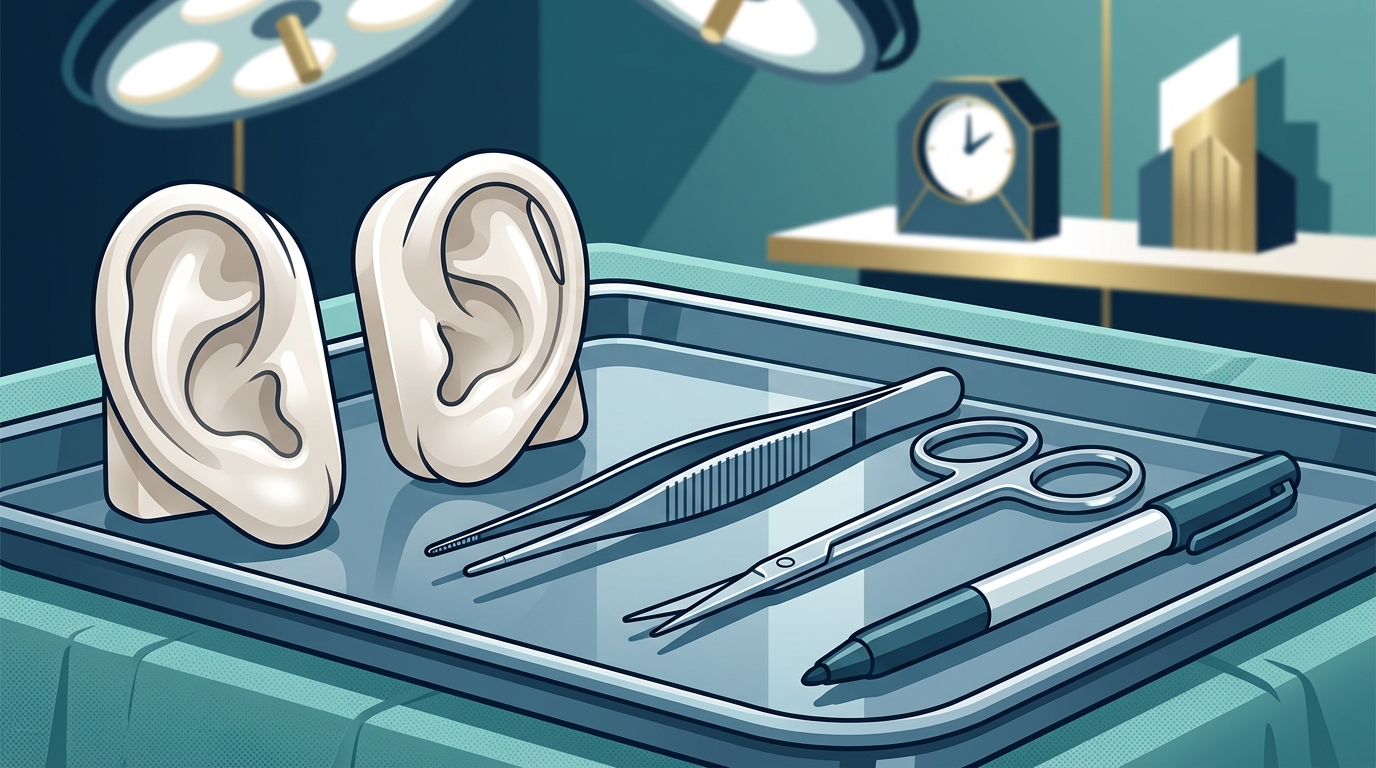
Surgical interventions typically require sixty to ninety minutes under local anesthesia with sedation. Surgical duration metrics vary based on cartilage thickness and correction complexity. Surgeons place incisions behind the ear to minimize visible scarring. Permanent sutures create the desired fold without removing large cartilage sections. Patients wear a supportive headband for several days to minimize swelling. Most individuals return to light desk work within five to seven days. Full tissue settling occurs over three to four months.
Postoperative Care and Long-Term Results
Postoperative care is the structured recovery protocol that ensures optimal tissue healing. Postoperative guidelines emphasize keeping the surgical site dry and protected. Patients must avoid sleeping on their sides during the initial healing phase. Gentle cleansing and prescribed antibiotic ointment prevent bacterial colonization. Scar maturation progresses from pink to pale white over twelve months. Long-term satisfaction rates consistently exceed ninety percent when surgical technique prioritizes natural cartilage preservation. Patients visiting the contact page can schedule a detailed recovery consultation. Clinicians monitor tissue response to adjust bandage pressure accordingly.
Surgical Approach Comparison
| Technique | Incision Placement | Cartilage Modification | Recovery Duration |
|---|---|---|---|
| Suture-Based Folding | Post-auricular (behind ear) | Folded and secured with permanent sutures | 5 to 7 days |
| Cartilage Scoring | Post-auricular (behind ear) | Surface weakened to allow bending | 7 to 10 days |
| Cartilage Excision | Post-auricular (behind ear) | Portions removed to reduce bulk | 7 to 14 days |
Key Takeaways
- Otoplasty procedures correct prominent ears through precise cartilage manipulation and permanent suturing techniques.
- Facial growth typically completes by age five, making early intervention highly effective for children.
- Dr. Sagar Patel maintains a dedicated Beverly Hills practice focused exclusively on facial and ear reconstruction.
- Surgical incisions are strategically placed behind the ear to ensure completely invisible scarring.
- Recovery timelines average five to seven days for light activities and three to four months for final settling.
- Long-term patient satisfaction consistently exceeds ninety percent when prioritizing natural tissue preservation.
Frequently Asked Questions
Is otoplasty painful during the recovery period?
Most patients report mild discomfort rather than severe pain during the initial healing phase. Surgeons prescribe targeted analgesics to manage swelling and tissue sensitivity. The supportive headband provides additional stabilization while minimizing movement.
Can ear pinning surgery be performed on adults?
Adult patients qualify for treatment as long as their ear cartilage retains sufficient flexibility. Surgeons adjust suture placement to accommodate thicker tissue density. Final results remain stable and natural regardless of patient age.
How long do the surgical results typically last?
Permanent sutures and preserved cartilage structure ensure lifelong aesthetic improvements. Minor tissue settling occurs over the first twelve months. Patients rarely require revision surgery when initial technique prioritizes anatomical balance.
What is the average cost of ear surgery in Beverly Hills?
Pricing varies based on anesthesia type, facility fees, and correction complexity. Procedure cost factors include surgeon experience and geographic market rates. The practice offers transparent pricing during the initial consultation.
Are there visible scars after the procedure?
Incisions are strategically concealed within the natural crease behind the ear. Scar tissue matures into a fine, pale line that remains completely hidden. Patients viewing the blog resources can review detailed healing progression documentation.
When can patients resume strenuous physical activities?
Light cardiovascular exercise typically resumes after three weeks. Contact sports and heavy weightlifting require six to eight weeks of clearance. Surgeons monitor tissue integrity before approving intense physical regimens.
Schedule Your Consultation
Securing your preferred surgical timeline requires early communication with the clinical team. Patients can contact the Beverly Hills office directly to discuss procedural details and pricing structures. The practice prioritizes personalized surgical planning to match individual anatomical requirements. Visit the contact page to request an appointment. Dr. Sagar Patel and his clinical staff provide comprehensive guidance throughout every stage of your transformation.