

Choosing the right surgeon for ear pinning requires precise anatomical knowledge and refined surgical technique. According to the American Society of Plastic Surgeons, over 15,000 otoplasty procedures are performed annually across the United States, with patient satisfaction rates consistently exceeding 90 percent. ASPS data confirms that modern techniques prioritize natural contouring while maintaining structural integrity. Patients seeking exceptional outcomes must evaluate board certification, procedural volume, and aesthetic philosophy before scheduling a consultation. This comprehensive guide examines the exact criteria that define elite facial plastic surgery practices in Southern California.
Evaluating Surgeon Credentials
Otoplasty demands specialized training beyond general plastic surgery. Board certification remains the foundational requirement for any practitioner performing ear reshaping. Candidates should verify membership with the American Board of Facial Plastic and Reconstructive Surgery. This designation confirms rigorous examination standards and continuous education requirements. Dr. Sagar Patel maintains active fellowship status while operating from a dedicated Beverly Hills facility. Review his clinical background to understand his specific training pathway. Patients should also verify hospital privileges, as facility accreditation directly correlates with surgical safety standards. Verifying these credentials eliminates unnecessary risk during the preoperative planning phase.
Understanding the Otoplasty Procedure
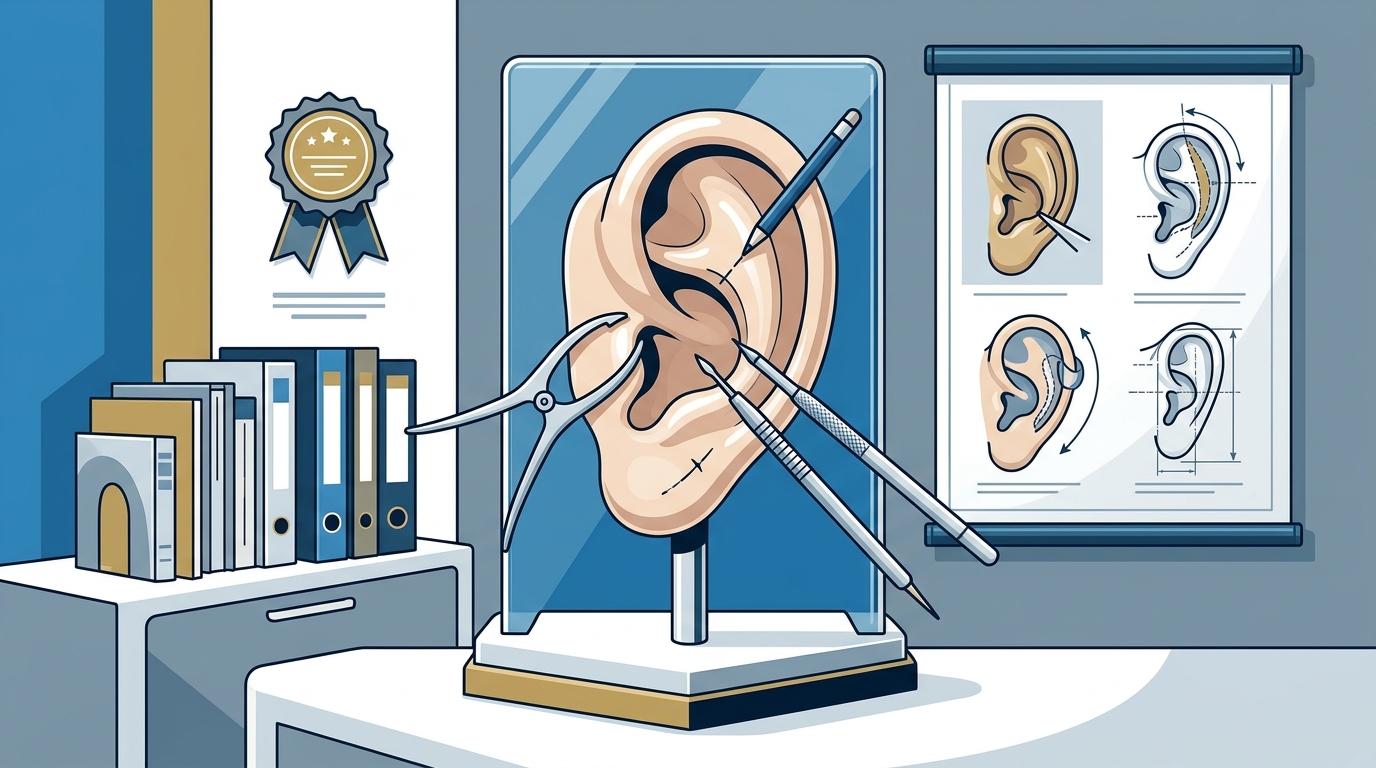
Otoplasty is a surgical procedure designed to reposition or reshape protruding ears closer to the head. The operation typically requires approximately one hour under local anesthesia with sedation or general anesthesia. Surgeons utilize precise cartilage scoring techniques to create lasting structural changes. According to the Mayo Clinic, incisions are strategically placed within the natural crease behind the ear. Mayo Clinic guidelines emphasize that preserving natural ear landmarks prevents an artificial appearance. The incision placement remains hidden within the natural crease behind the ear. This strategic positioning ensures long-term aesthetic concealment while allowing precise cartilage manipulation. Patients should expect mild swelling during the initial recovery window.
Recovery and Aftercare Protocols
Recovery timelines vary based on individual healing responses and surgical complexity. Most patients experience mild swelling and bruising during the initial fourteen days. According to the National Institutes of Health, compliance with head wrap protocols significantly reduces complication rates. NIH clinical summaries indicate that patients must avoid sleeping on their sides during the first week. Gentle cleansing and prescribed antibiotic ointment prevent bacterial introduction. Read our detailed recovery guide for step-by-step postoperative instructions. Most individuals return to non-physical work or school within five business days. Strict adherence to postoperative instructions directly influences final aesthetic outcomes.
Comparing Surgical Techniques
Modern otoplasty utilizes two primary cartilage modification methods. The suture-based approach relies on permanent internal stitching to fold cartilage without incisions. The cartilage scoring method involves controlled incisions to reshape structural rigidity. According to the American Academy of Facial Plastic and Reconstructive Surgery, suture techniques often preserve more natural ear flexibility. AAFPFS research demonstrates that suture techniques often preserve more natural ear flexibility. Dr. Patel evaluates each patient anatomy to determine the optimal approach. Some cases require combined techniques to achieve balanced projection and fold definition. Explore our ear pinning services to view specific technique applications. Understanding these mechanical differences ensures realistic expectation setting before surgery.
Selecting Your Surgical Clinic
Facility accreditation directly impacts patient safety and procedural outcomes. Board-approved surgical centers maintain strict infection control and emergency response protocols. According to the American Society of Plastic Surgeons, facility accreditation directly impacts patient safety. ASPS facility standards require regular inspections and certified anesthesia monitoring. Patients should verify that their surgeon holds active privileges at accredited hospitals. This verification ensures access to advanced emergency equipment if complications arise. Contact our Beverly Hills office to schedule a comprehensive anatomical evaluation. Transparent pricing and clear communication remain hallmarks of elite practices. Selecting an accredited facility guarantees adherence to the highest medical safety benchmarks.
Procedure Comparison Matrix
| Technique | Incision Requirement | Cartilage Modification | Ideal Candidate Profile | Typical Downtime |
|---|---|---|---|---|
| Suture-Based Otoplasty | Hidden behind ear | Permanent internal stitching | Flexible cartilage, mild protrusion | 3 to 5 days |
| Cartilage Scoring | Hidden behind ear | Controlled structural incisions | Rigid cartilage, significant projection | 5 to 7 days |
| Combined Approach | Hidden behind ear | Stitching plus scoring | Complex anatomy, asymmetric ears | 5 to 7 days |
Key Takeaways
- Over 15,000 ear reshaping procedures occur annually in the United States.
- Board certification from the American Board of Facial Plastic and Reconstructive Surgery remains mandatory.
- Dr. Sagar Patel operates from 415 N. Crescent Suite 360 in Beverly Hills.
- Suture techniques preserve natural ear flexibility while scoring methods reshape rigid cartilage.
- Most patients return to professional duties within five business days.
- Facility accreditation directly correlates with emergency response capabilities.
- Patient satisfaction rates consistently exceed 90 percent across accredited centers.
Frequently Asked Questions
What is the ideal age for ear pinning surgery?
Otoplasty is a surgical procedure designed to reposition or reshape protruding ears closer to the head. Most surgeons recommend waiting until ear cartilage fully develops, typically around age five or six. This timing ensures structural stability while minimizing psychological impact during childhood development.
Does ear reshaping surgery leave visible scarring?
Incisions are strategically placed within the natural crease behind the ear. This positioning ensures long-term aesthetic concealment while allowing precise cartilage manipulation. Proper wound closure techniques further minimize visible marks during the healing process.
How long do otoplasty results typically last?
Otoplasty is a permanent structural modification that maintains its aesthetic benefits throughout a patient lifetime. Cartilage scoring and suture techniques create lasting anatomical changes. Regular follow-up examinations confirm long-term structural stability.
Can ear pinning correct asymmetrical ears?
Asymmetric ear projection requires customized surgical planning to achieve balanced facial harmony. Surgeons evaluate each ear independently before determining the optimal modification approach. Combined techniques often address complex anatomical variations effectively.
What anesthesia options are available for ear surgery?
Local anesthesia with intravenous sedation remains the most common approach for adult patients. General anesthesia provides complete unconsciousness for pediatric cases or anxious individuals. Certified anesthesia professionals monitor vital signs throughout the entire procedure.
Book Your Consultation
Securing your appointment with a top-tier facial plastic surgeon requires proactive scheduling. Dr. Sagar Patel and his clinical team provide comprehensive anatomical evaluations at our Beverly Hills location. Visit our main practice page to explore our complete surgical portfolio. Call 424-394-0959 to schedule your personalized consultation today. Early planning ensures optimal surgical timing and seamless recovery coordination.