
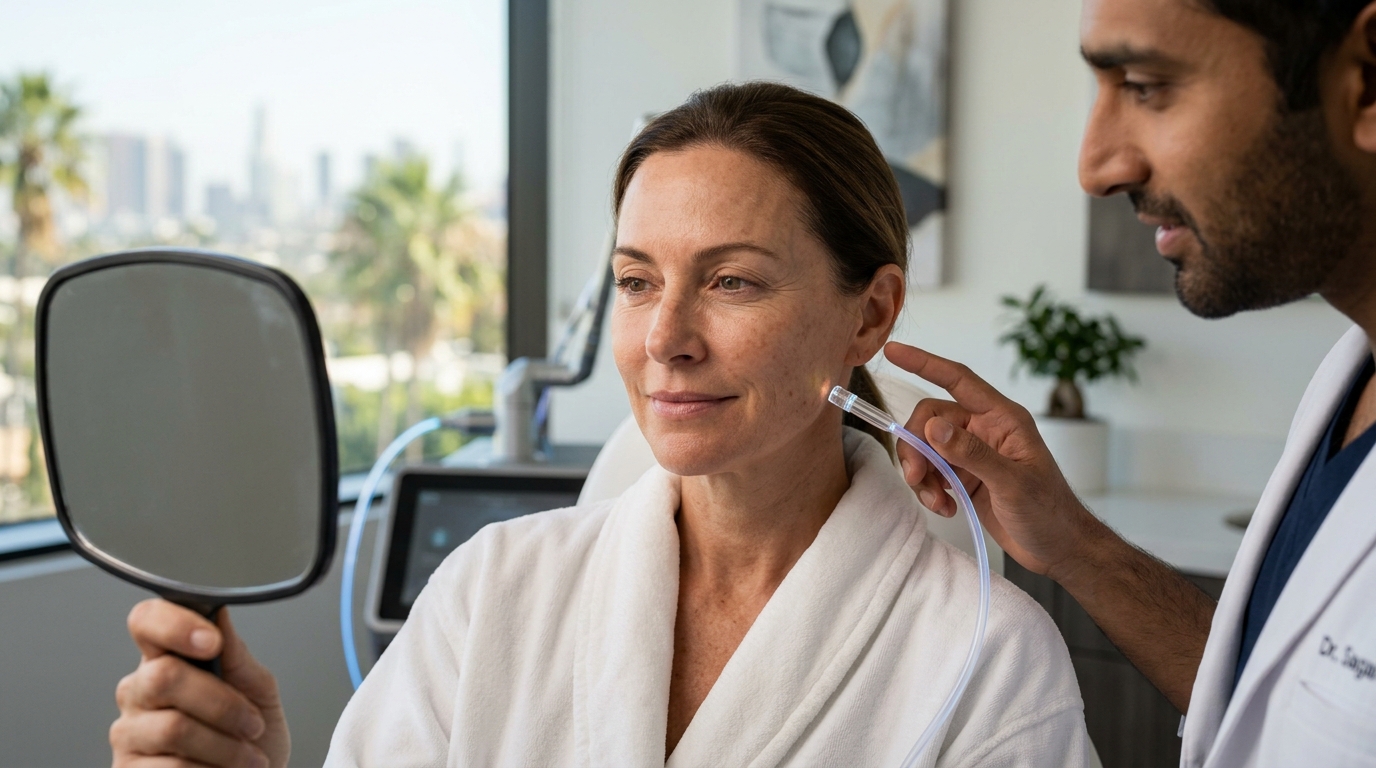
Wrinkles and uneven pigmentation are among the most common skin concerns that bring patients to a cosmetic practice. Laser resurfacing is a proven, non-surgical approach that uses concentrated light energy to remove damaged outer skin layers while stimulating collagen production beneath the surface. At Sagar Patel Aesthetics in Beverly Hills, Dr. Patel's team uses the UltraClear cold fiber laser to deliver dramatic results with minimal downtime, making it a standout choice for patients of every skin type and tone.
What Is Laser Resurfacing?
Laser skin resurfacing is a cosmetic procedure that uses targeted laser energy to reduce the appearance of wrinkles, scars, and uneven pigmentation. According to Cleveland Clinic, the technique directs short, concentrated pulsating beams of light at irregular skin, removing the epidermis and heating the dermis to trigger healing.
There are two broad categories: ablative lasers (like CO2 and erbium) that vaporize outer skin layers, and non-ablative lasers (like Fraxel) that work beneath the surface without removing tissue. A newer third category, cold fiber lasers, combines ablative precision with dramatically reduced heat damage.
The UltraClear Difference: Cold Fiber Laser Technology
UltraClear is the world's first cold ablative fractional fiber laser, designed specifically for anti-aging and skin rejuvenation. It is the first and only advanced laser technology used at Sagar Patel Aesthetics, chosen after Dr. Patel's team evaluated available options for over a decade.
Why Cold Fiber Technology Matters
Traditional ablative lasers generate significant heat, which increases the risk of post-inflammatory hyperpigmentation, especially in medium-to-dark skin tones. UltraClear's proprietary 3DMIRACL and 3DIntelliPulse technology minimizes excess thermal damage while maximizing collagen stimulation. This makes it FDA-cleared for all skin types, including Fitzpatrick types III through VI.
Versatile Treatment Modes
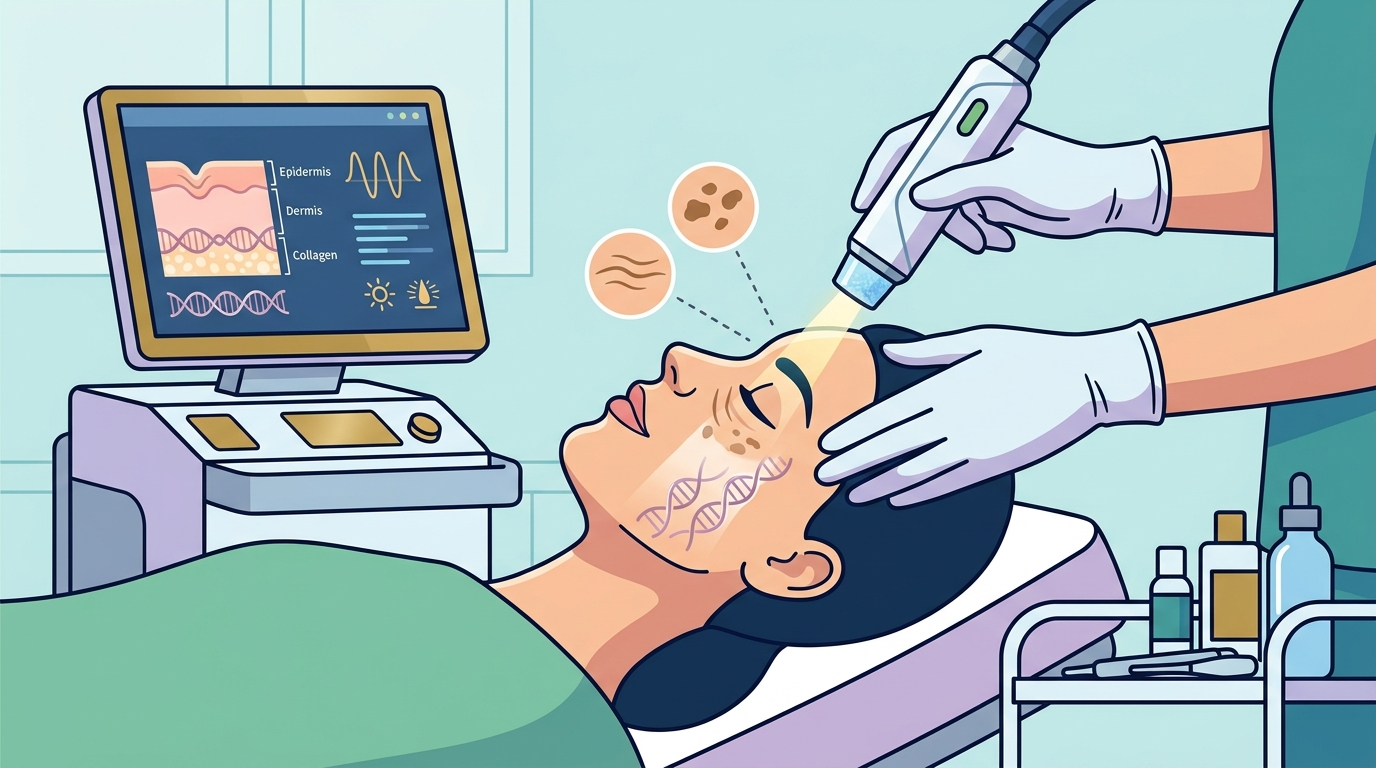
UltraClear offers multiple modes ranging from a gentle lunchtime peel (3DMIRACL/Clear Mode) to deep collagen remodeling and laser-coring for severe wrinkles and scars. This means your provider can customize every session to your specific skin concern and lifestyle.
How Laser Resurfacing Treats Wrinkles and Pigmentation
Wrinkles form when collagen and elastin fibers in the dermis break down over time due to sun exposure, aging, and environmental stress. Pigmentation issues like age spots and melasma result from uneven melanin distribution in the skin.
Laser resurfacing addresses both problems simultaneously. The laser vaporizes damaged surface cells carrying excess pigment while creating controlled micro-injuries in the dermis that trigger the body's natural wound-healing response. This stimulates new collagen and elastin production, leading to firmer, smoother, more evenly toned skin.
Targeting Pigmentation Safely
Pigmentation treatment is where laser choice matters most. Traditional CO2 lasers carry a higher risk of worsening discoloration in darker skin. UltraClear's cold fiber approach reduces this risk significantly, making it a safer option for patients with Hispanic, Asian, Middle Eastern, and African American skin tones seeking pigmentation correction.
Comparing Popular Laser Resurfacing Technologies
Choosing the right laser depends on your skin type, goals, and tolerance for downtime. The table below compares the most commonly used platforms.
| Feature | UltraClear (Cold Fiber) | Fractional CO2 | Fraxel (Non-Ablative) | PicoSure/PicoWay |
|---|---|---|---|---|
| Type | Ablative fractional | Ablative fractional | Non-ablative fractional | Picosecond (non-ablative) |
| Wrinkle Reduction | Strong (deep and fine lines) | Strong (gold standard) | Moderate (fine lines) | Mild to moderate |
| Pigmentation | Excellent | Good (risk in darker skin) | Good | Excellent |
| Safe for All Skin Tones | Yes (FDA-cleared) | No (types I-III preferred) | Most types | Yes |
| Typical Downtime | 1 to 5 days | 7 to 14 days | 3 to 5 days | Minimal (0 to 2 days) |
| Sessions Needed | 1 to 3 | 1 to 2 | 3 to 6 | 3 to 4 |
| Collagen Stimulation | High | High | Moderate | Moderate |
As the table shows, UltraClear occupies a unique position: it delivers ablative-level results with a downtime profile closer to non-ablative treatments, and it is safe across all skin tones.
Who Is an Ideal Candidate?
An ideal candidate is someone in overall good health who wants to address visible signs of aging or sun damage without undergoing surgery. Laser resurfacing works well for patients dealing with:
- Fine lines and deeper wrinkles around the eyes, mouth, and forehead
- Age spots, sun spots, and uneven skin tone
- Melasma or post-inflammatory hyperpigmentation
- Acne scars and textural irregularities
- Loss of skin elasticity and dullness
Patients with active acne, certain autoimmune conditions, or those currently using isotretinoin may need to postpone treatment. A personalized consultation at our Beverly Hills office will determine the right plan for you.
What to Expect: Procedure, Recovery, and Results
During the Treatment
Sessions at Sagar Patel Aesthetics typically last 10 to 15 minutes for a standard treatment. For lighter modes, no numbing cream is required. Deeper treatments may use topical anesthesia, but most patients report only mild warmth or tingling.
Recovery Timeline
Light resurfacing treatments involve 1 to 3 days of mild redness and peeling. Deeper sessions may require up to a week of social downtime, with some peeling as new skin surfaces. Compared to traditional CO2 laser recovery of 7 to 14 days, UltraClear offers a notably faster return to daily activities.
When Results Appear
Many patients see initial improvement within the first week. Collagen remodeling continues for months after treatment, with results from more intensive sessions lasting 1 to 5 years. Maintaining results requires sun protection and a consistent skincare routine.
Why Choose Sagar Patel Aesthetics in Beverly Hills
Dr. Sagar Patel is a double board-certified facial plastic surgeon who focuses exclusively on the face. His practice operates on a concierge model, providing each patient with a personalized experience from consultation through recovery. The office is located in the heart of Beverly Hills with free parking and a welcoming environment.
The laser resurfacing program is led by Nurse Sofia, a trained specialist who tailors every UltraClear session to the patient's unique skin type and goals. Whether you are looking to reduce fine lines, correct pigmentation, or simply refresh your complexion, the team at S.P.A. delivers results within a first-class experience. Schedule your consultation today.
Key Takeaways
- Laser resurfacing is a non-surgical procedure that treats both wrinkles and pigmentation by removing damaged skin and stimulating collagen production.
- UltraClear is a cold ablative fractional fiber laser that is FDA-cleared for all skin types, including darker tones often underserved by traditional lasers.
- Compared to CO2 lasers, UltraClear delivers similar wrinkle-reduction power with significantly less downtime (1 to 5 days vs. 7 to 14 days).
- Sagar Patel Aesthetics in Beverly Hills selected UltraClear after evaluating laser technology for over a decade.
- Treatments are quick (10 to 15 minutes on average) and most patients need only 1 to 3 sessions for optimal results.
- A personalized consultation is essential to determine the right treatment mode and intensity for your skin.
Frequently Asked Questions
What is laser resurfacing?
Laser resurfacing is a cosmetic procedure that uses focused laser energy to remove damaged outer skin layers and heat deeper layers, stimulating collagen production for smoother, more even-toned skin.
Is UltraClear laser safe for dark skin?
Yes. UltraClear is FDA-cleared for all Fitzpatrick skin types, including types IV through VI. Its cold fiber technology minimizes excess heat, which reduces the risk of post-inflammatory hyperpigmentation that is common with traditional ablative lasers.
How long does recovery take after laser resurfacing?
Recovery depends on the treatment intensity. Light UltraClear sessions involve 1 to 3 days of mild redness. Deeper treatments may require up to a week of peeling. This is significantly shorter than the 7-to-14-day recovery typical of fractional CO2 lasers.
How many laser resurfacing sessions will I need?
Most patients see significant improvement after a single UltraClear session. For optimal results, 1 to 3 treatments spaced about 4 to 6 weeks apart are typically recommended, depending on the severity of wrinkles or pigmentation.
Does laser resurfacing hurt?
UltraClear treatments are notably comfortable. Lighter settings require no numbing cream at all. Deeper treatments use topical anesthesia, and most patients rate discomfort between 0 and 5 on a 10-point scale.
Can laser resurfacing treat melasma?
Yes. UltraClear can address melasma, age spots, sun damage, and other forms of hyperpigmentation. Its cold fiber technology is particularly well-suited for pigmentation concerns because it delivers precise energy without the bulk heating that can worsen melasma.
How long do laser resurfacing results last?
Results from light treatments are visible within days and can be maintained with periodic sessions. More intensive treatments produce results that may last 1 to 5 years, especially when paired with daily sun protection and a quality skincare regimen.
How do I schedule a consultation at Sagar Patel Aesthetics?
You can contact our Beverly Hills office by phone or through the online appointment request form. During your consultation, the team will assess your skin, discuss your goals, and recommend a personalized treatment plan.
Take the Next Step Toward Clearer, Younger-Looking Skin
If wrinkles or pigmentation are holding you back from feeling confident in your skin, laser resurfacing with UltraClear at Sagar Patel Aesthetics can help. Request your consultation today and discover what Beverly Hills' concierge approach to facial aesthetics can do for you.